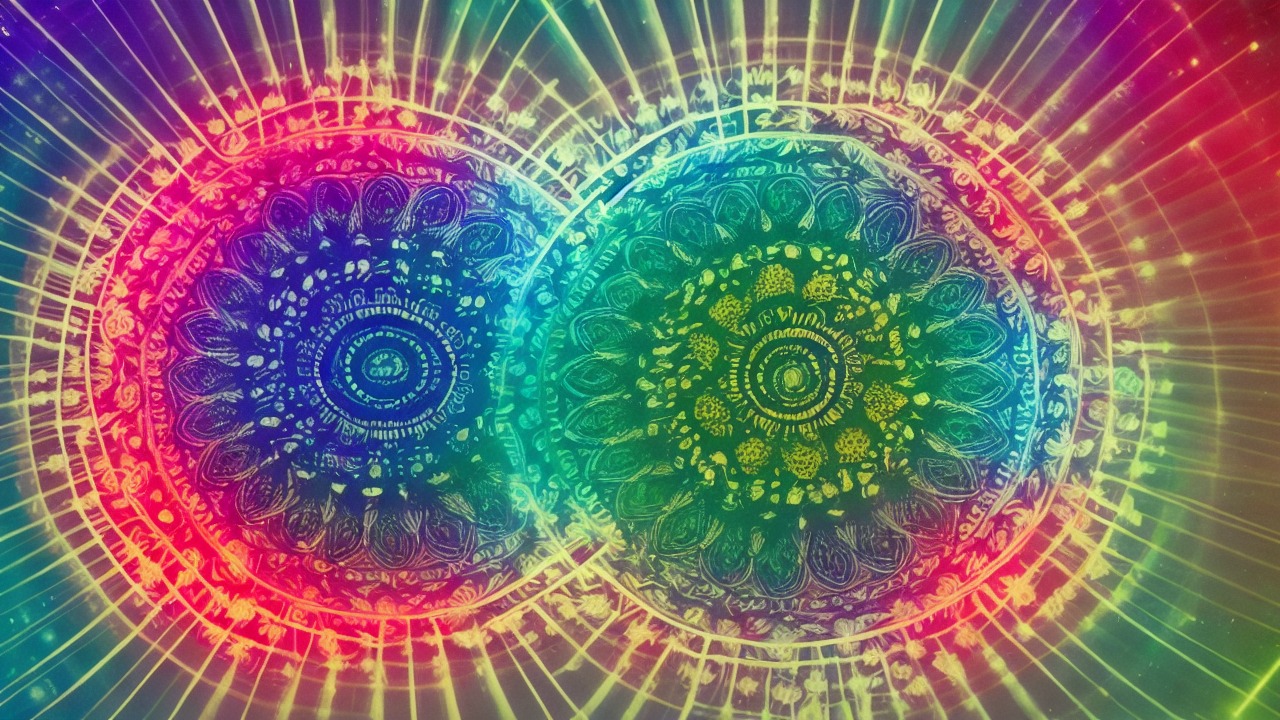
Jung explains that mandalas often appear in dreams when individuals experience inner conflict or emotional fragmentation. These circular images act as containers of tension, creating an inner boundary of safety. Dreamers describe radiant discs, circular chambers, or spirals without prior symbolic education.
He argues that these mandala images emerge autonomously from the unconscious and mirror ancient protective symbols such as sun wheels or magic circles. Their appearance signals the psyche’s attempt to integrate opposing forces.
Jung interprets such dreamlike mandalas as a spontaneous movement toward individuation, helping stabilize the dreamer’s inner world.